An estate agent website should sell the agent’s judgement, not just list houses.
Buyers and sellers are choosing the person they trust with the biggest transaction of their life. The right site shows the work, names the people, and turns curiosity into a valuation.
- Property-first hero with curated, well-photographed listings
- Agent profiles that build personal trust
- Valuation enquiry as the primary, named CTA
Why estate agents need a different kind of website
Most agent websites look interchangeable — a portal-style listings grid and a phone number. A great agent site does the opposite: it makes clear who is selling these houses, what kind of judgement they bring, and why a seller should pick them over the high-street chain.
People pick the agent, not the portal
Sellers research agents personally before listing. Named, photographed agents with their own track record consistently outperform anonymous "the team" copy.
High-trust transactions need high-trust design
A discount-feeling site sells discount listings. A considered, premium site signals considered, premium service — and attracts the listings to match.
The valuation is the conversion moment
Every page should make requesting a valuation the most obvious next step — a clear form, a named contact, and zero pressure.
What a great estate agent website includes
These are the components we typically design around for an estate agent — adapted to your area, your specialism and the kind of vendor or buyer you want to attract.
Curated property hero
A small selection of well-photographed featured listings — not a database dump.
Agent profiles
Named agents with their patch, specialism and recent sold work.
Valuation request
A short, friendly enquiry form that goes to a named agent, not "info@".
Sold portfolio
Recent sales as proof of pricing judgement and demand.
Local knowledge
Neighbourhood guides and area expertise that show real local knowledge.
Named reviews
Vendor and buyer reviews with names, dates and the property type — not anonymous stars.
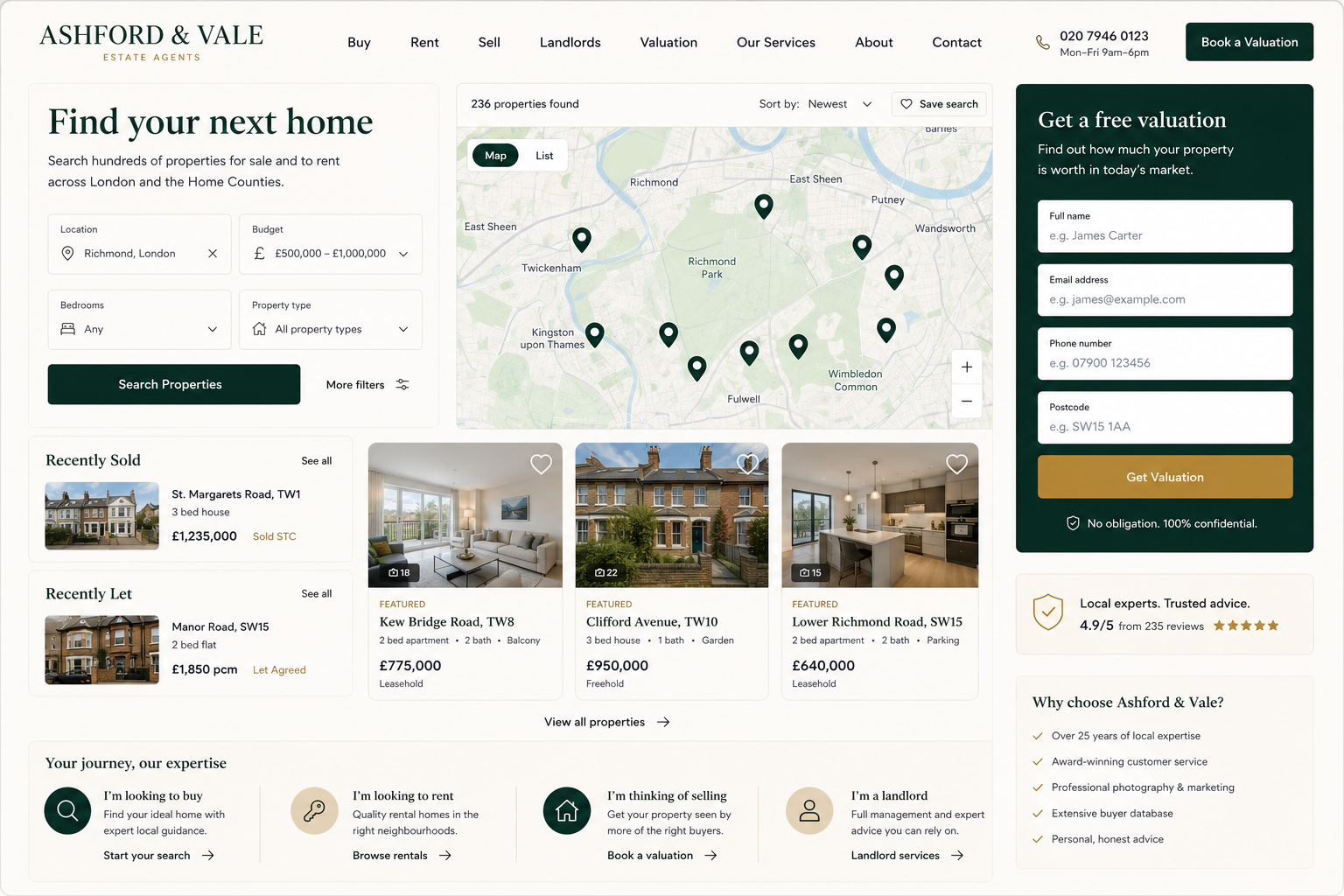
A estate agent & property site, designed around how the business works.
Below is one direction we might explore for a business in this space. Every Social Spark website is custom-designed — this is a starting point, not a template.
Why this structure converts
A potential vendor sees a small, well-curated portfolio of recent work, recognises themselves in the kind of property the agent sells, meets the named person who would handle their sale, and requests a valuation in two clicks. The portal feeling is replaced with a professional one.
Estate agent & property website questions
Can it pull listings from my CRM or portal feed?
Yes — we can integrate a feed from your CRM or portal so listings stay current without double entry. Rather than a raw database grid, we present a curated selection of well-photographed properties that reflects the kind of homes you want to be known for.
How do we win instructions from the high-street chains?
By making it clear who is behind the sign. Sellers research agents personally, so named agents with their patch, recent sold work and a considered, premium feel beat an interchangeable portal-style site every time.
What should the main call to action be?
A valuation request, made obvious on every page and routed to a named agent rather than a generic inbox. Recent sold results sitting alongside it prove your pricing judgement, so requesting a valuation feels like the natural next step.
Guides that help you decide
Ready to see what your website could look like?
Answer a few questions about your business and get a custom website preview tailored to how you actually win customers — no commitment.