A product brand site should make the object feel essential, then make buying it effortless.
Considered buyers want to know who made the thing, what it is made of and why it exists. The right site delivers the story and the spec — without slowing down the conversion.
- Editorial product storytelling that justifies the price
- Clear materials, sourcing and how-it-is-made content
- Frictionless checkout and honest delivery information
Why product brands need a different kind of website
A product brand is not a shop — it is a point of view. The customer is buying into something specific: a maker, a material, a way of doing things. A generic ecommerce template loses that point of view; a great site protects it.
Story sells the first purchase
A first-time buyer wants to know why this object exists, who made it and what it stands for. Without the story, the price feels arbitrary.
Photography is the product
For physical goods, the imagery IS the buying decision — material close-ups, the object in context, scale shots. White-background catalogue photography rarely converts considered buyers.
Repeat buyers come back for range, not novelty
Loyal customers buy the next thing because they trust the maker. The site needs to reward them with depth, not surprise them with discounts.
What a great product brand website includes
These are the components we typically design around for a product brand — adapted to your collections, your maker story and the customers you actually want to win.
Editorial homepage
Campaign-led, story-first — a brand hero, not a product carousel.
Collection / category pages
Curated entry points that feel considered, not catalogued.
Product detail with materials and origin
The detail that justifies a premium price and earns trust.
Brand story
Who you are, what you make, what you refuse to do — in your voice.
Reviews and customer photos
Real customer images and named reviews — the strongest social proof for considered buyers.
Frictionless checkout
Mobile-first, clear delivery, returns and payment options.
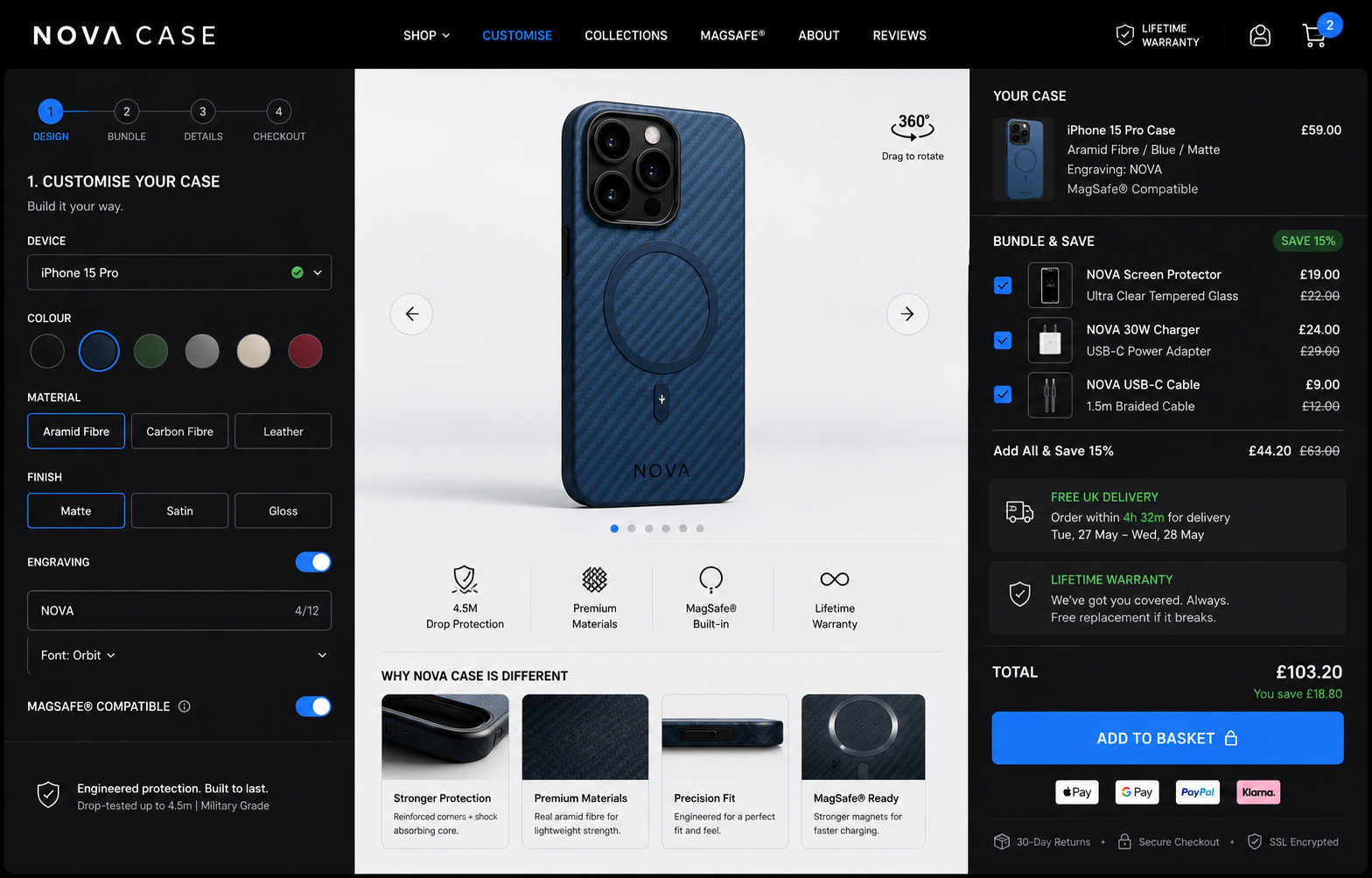
A physical product brand site, designed around how the business works.
Below is one direction we might explore for a business in this space. Every Social Spark website is custom-designed — this is a starting point, not a template.
Why this structure converts
A new customer is welcomed by the brand, drawn into a collection, given enough detail to trust the material and the maker, then offered the simplest possible checkout. Existing customers skip the story and buy what is new. Both journeys end at the same till.
Physical product brand website questions
Should I build on Shopify or something custom?
Most product brands are well served by a brand-led Shopify build that keeps a proven checkout while the storefront feels like your point of view. If your range, subscriptions or logistics are unusual, a more bespoke system can be the better fit — we will be honest about which you need.
How do I justify a premium price online?
Story and photography do it together. The maker, the materials and why the object exists give the price meaning, while close-up and in-context imagery let buyers feel the quality. Without that context, a premium price reads as arbitrary.
How do you encourage repeat purchases?
Loyal customers come back for range and trust, not discounts, so we reward them with depth — easy reordering, clear new arrivals and a brand they recognise. Returning buyers skip the story and head straight to what is new.
Guides that help you decide
Ready to see what your website could look like?
Answer a few questions about your business and get a custom website preview tailored to how you actually win customers — no commitment.